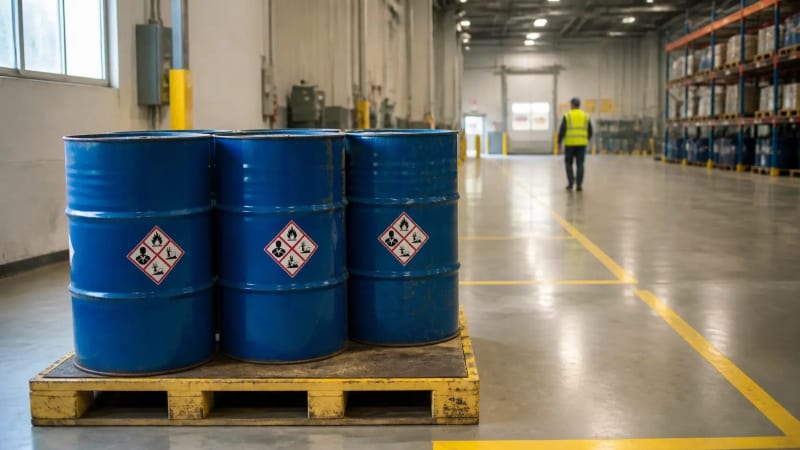

A few summers ago, a small auto-body shop owner in Ohio called an environmental consultant in a panic. He was about to sell his property, and the buyer's bank wanted an environmental risk assessment before approving the loan. He had never heard the term before, and one missed step nearly cost him the sale.
This guide breaks the entire process into clear, plain-English steps. By the end, you will know what an environmental risk assessment really is, the EPA's official framework, a practical 7-step process, how to build a risk matrix, and what it actually costs in North America.
What Is an Environmental Risk Assessment?
An environmental risk assessment, or ERA, is a structured way to figure out how an activity, site, or substance could harm people or the environment, and how serious that harm might be. It looks at hazards, who or what is exposed, and how likely the bad outcome really is.
Why Environmental Risk Assessment Matters in 2026
Both the U.S. EPA and Environment and Climate Change Canada (ECCC) treat ERA as the foundation of their risk-based decision-making. According to NOAA's Billion-Dollar Disasters database, the United States has set new records for billion-dollar climate and weather events in recent years, and the Insurance Bureau of Canada has tracked rising severe-weather payouts crossing billions of dollars annually. Smart ERAs catch these risks early, before they become lawsuits or cleanups.
ERA vs EIA: What Is the Difference?
People mix these two up constantly.
- Environmental Risk Assessment (ERA): Evaluates the probability and severity of harm from existing or proposed hazards.
- Environmental Impact Assessment (EIA): Predicts the broader environmental, social, and economic effects of a new project before approval, usually under NEPA in the U.S. or the federal Impact Assessment Act in Canada.
Think of EIA as the wide lens for new projects, and ERA as the focused tool for understanding specific risks at any stage.
The 4 Core Stages of Environmental Risk Assessment (EPA Framework)
The EPA's classic framework has four stages. This is the most important section to bookmark.
- Hazard Identification: Spot the chemicals, activities, or stressors that could cause harm.
- Exposure Assessment: Figure out who or what comes in contact with the hazard, how often, and how much.
- Dose-Response (Effects) Assessment: Determine the relationship between exposure level and harm.
- Risk Characterization: Combine the above to describe the overall risk in clear terms.
Environmental Risk Assessment: A Practical 7-Step Guide
This is the everyday workflow most consultants use across North America.
Step 1: Define the Scope and Objectives
Decide what you are assessing: a single chemical, a property, a process, or a full operation. Write a clear scoping statement covering boundaries, timeframe, and stakeholders.
Step 2: Identify Hazards and Stressors
Walk the site, review records, and list every possible hazard. Common ones include fuel tanks, solvents, asbestos, heavy metals, and increasingly, climate-driven stressors like flooding and wildfire smoke.
Step 3: Gather Site and Baseline Data
Pull historical use records, soil and groundwater data, regulatory filings, and aerial imagery. In the U.S., check the EPA Superfund and ECHO databases. In Canada, use the Federal Contaminated Sites Inventory, which tracks more than 24,000 federal sites according to ECCC.
Step 4: Assess Exposure Pathways
Map how a contaminant could reach people or ecosystems. Typical pathways include drinking water, air inhalation, soil contact, and food chain uptake. If there is no pathway, there is no real risk.
Step 5: Evaluate Likelihood and Consequences
Rate the probability of each scenario and the severity if it happened. This is where the risk matrix comes in (see next section).
Step 6: Score, Rank, and Characterize the Risk
Combine likelihood and consequence to assign each risk a score, then sort them from highest to lowest. Focus your attention on the top tier first.
Step 7: Recommend Mitigation and Monitoring
Suggest controls such as engineering fixes, administrative procedures, or land-use restrictions. Build in a monitoring plan with clear triggers, sampling schedules, and reporting deadlines.
How to Build a Risk Matrix (With Worked Example)
A risk matrix is the most useful tool you will own. A simple 5×5 grid plots Likelihood (1-5) against Consequence (1-5).
| Likelihood / Consequence | 1 (Minor) | 2 (Low) | 3 (Moderate) | 4 (Major) | 5 (Catastrophic) |
|---|---|---|---|---|---|
| 5 (Almost Certain) | 5 | 10 | 15 | 20 | 25 |
| 4 (Likely) | 4 | 8 | 12 | 16 | 20 |
| 3 (Possible) | 3 | 6 | 9 | 12 | 15 |
| 2 (Unlikely) | 2 | 4 | 6 | 8 | 10 |
| 1 (Rare) | 1 | 2 | 3 | 4 | 5 |
Worked example: A leaking underground fuel tank near a shallow drinking-water well scores 4 (Likely) on likelihood and 5 (Catastrophic) on consequence, giving a score of 20. That goes straight to the top of the action list. A small surface oil stain in a paved parking lot might score 2 × 1 = 2 and can be handled later.
Color-code the matrix green, yellow, and red for instant communication with non-technical decision-makers.
Climate Change and Modern ERA: What Is New in 2026
Modern ERAs must now bake in climate-driven environmental hazards. Recent EPA and ECCC guidance updates push assessors to include flooding, wildfire smoke, extreme heat, and changing precipitation patterns as standard considerations. If your assessment ignores climate stressors, regulators in both countries are starting to push back.
Indigenous Consultation Requirements in North America
This is where many ERAs fall short. In Canada, Section 35 of the Constitution Act creates a legal duty to consult Indigenous peoples when activities may affect their rights. In the U.S., Executive Order 13175 requires meaningful tribal consultation on federal actions. Many leading firms now follow the international principle of free, prior, and informed consent (FPIC). Skipping this step can stop a project in its tracks.
Real-World Example: A Small Industrial Site ERA
Picture a 1-acre former dry-cleaning property in Pennsylvania. Step 2 finds that tetrachloroethylene (PCE) has been used for decades. Step 3 confirms shallow groundwater flow toward a residential block. Step 4 identifies vapor intrusion as the dominant exposure pathway. Step 5 rates likelihood as Likely (4) and consequence as Major (4), scoring 16. Step 7 recommends a sub-slab depressurization system in nearby homes plus quarterly indoor air monitoring. The owner closes the deal with confidence.
How Long Does an Environmental Risk Assessment Take and What Does It Cost?
| Project Size | Timeline | Typical Cost (USD) |
|---|---|---|
| Small site (single building, limited history) | 1 to 3 weeks | $5,000 to $15,000 |
| Mid-scope (industrial property, multi-pathway) | 1 to 3 months | $15,000 to $75,000 |
| Major project (regional, ecological, or Superfund-scale) | 6 to 12+ months | $75,000 to $500,000+ |
Costs vary widely by region and consultant. Always get at least three quotes. Keep in mind that Canadian fees are usually quoted in CAD and run roughly similar in scope.
What Should an Environmental Risk Assessment Report Include?
A complete ERA report should contain:
- Executive summary with top risks and recommendations
- Project scope and objectives
- Methodology, including the framework used
- Detailed findings by hazard and exposure pathway
- Risk characterization with the risk matrix
- Mitigation and monitoring plan
- Stakeholder and Indigenous consultation record
- Appendices with raw data, lab reports, and maps
Common Mistakes to Avoid
These five missteps cause more failed assessments than any technical error. Catch them early.
- Skipping baseline data collection
- Ignoring cumulative effects across multiple stressors
- Treating consultation as a checkbox
- Forgetting climate change scenarios
- Not building a real monitoring plan after the report is delivered
Frequently Asked Questions
Define scope, identify hazards, collect data, map exposure pathways, evaluate likelihood and consequences, score and rank, then recommend mitigation and monitoring.
An EIA predicts the broad effects of a new project before approval. An ERA focuses on probability and severity of harm from specific hazards at any stage.
Licensed environmental consultants, professional engineers, certified industrial hygienists, and in-house EHS teams at large companies. Government agencies also run their own ERAs.
The most common groupings are physical, chemical, biological, and social or community risks, with climate-driven hazards now sitting across all four.
A small site can be done in 1 to 3 weeks. Mid-scope work takes 1 to 3 months. Major federal or Superfund-scale assessments often run 6 to 12 months or longer.
Conclusion
A solid environmental risk assessment is part science, part strategy, and part communication. The EPA's 4-stage framework gives you the theory, the 7-step practical guide gives you the workflow, and the risk matrix gives you the language to explain it all to anyone in the room.
If your project sits on the line between safe and uncertain, this is the document that protects your people, your land, and your bottom line.
If this guide helped, share it with a colleague who is starting their first assessment, and drop a comment with the trickiest ERA challenge you have faced. We read every reply.
Use the 7-step framework and the 5×5 risk matrix from this guide to scope your next project today. The earlier you start, the cleaner the outcome.
Download the Risk Matrix