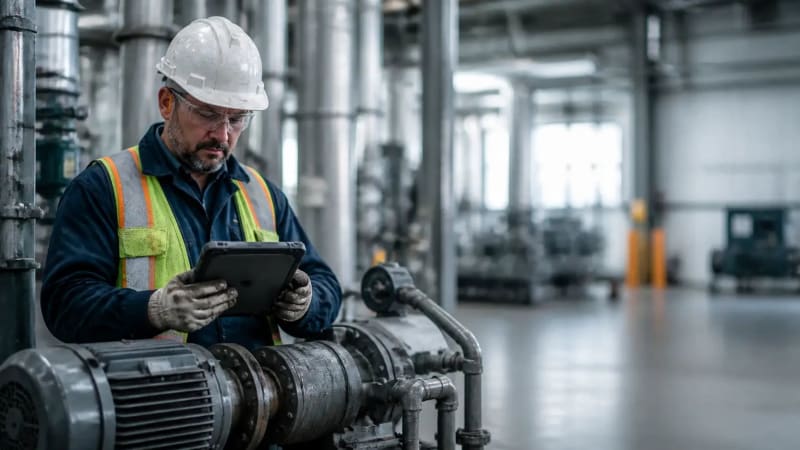


Every year, thousands of American and Canadian workers get hurt on the job because the wrong personal protective equipment was missing, broken, or never worn. According to the U.S. Bureau of Labor Statistics, construction alone recorded more than 1,050 fatal work injuries in 2022, the highest of any industry. PPE requirements by industry are not just paperwork. They are the last line of defense between a worker and a serious injury. This guide breaks down the rules for manufacturing, construction, and healthcare in the U.S. and Canada in simple words.
What Is PPE and Why It Matters
PPE stands for personal protective equipment. It includes gear that protects workers from hazards that cannot be fully removed through engineering or administrative controls. Under the hierarchy of controls, PPE is the final layer, used when other safeguards are not enough on their own.
A Simple Definition of Personal Protective Equipment
Think of PPE as workplace safety gear built for one job: keeping a worker safe when the danger cannot be eliminated. That includes hard hats, safety glasses, gloves, respirators, earplugs, and more.
The 4 Main Types of PPE
OSHA and CCOHS both group PPE into four broad categories:
- Head, eye, and face protection (hard hats, safety glasses, face shields)
- Hand protection (cut-resistant gloves, chemical gloves, disposable gloves)
- Respiratory protection (N95 respirators, half-face or full-face respirators)
- Body and foot protection (high-visibility apparel, aprons, steel-toe boots, fall harnesses)
PPE Requirements by Industry at a Glance
Here is a quick side-by-side view for North American workplaces.
| Industry | Core PPE | Governing Standard |
|---|---|---|
| Manufacturing | Hard hat, safety glasses, hearing protection, cut-resistant gloves, steel-toe boots | OSHA 29 CFR 1910 (U.S.) / CSA Z94 series (Canada) |
| Construction | Hard hat, high-visibility vest, safety glasses, work gloves, steel-toe boots, fall harness | OSHA 29 CFR 1926 Subpart E / CSA Z94 + provincial OHS rules |
| Healthcare | Disposable gloves, gowns, surgical masks, N95 respirators, face shields, eye protection | OSHA 1910.1030 + CDC + NIOSH / Health Canada + CSA |
Bookmark this table. It covers the basics for most roles across all three industries.
PPE Requirements in Manufacturing
Common Hazards in Manufacturing
Manufacturing workers face moving machinery, flying chips, loud noise, chemical splashes, and heat. Without the right gear, a single mistake can cause burns, cuts, hearing loss, or worse.
Required PPE for Manufacturing Workers
Typical manufacturing PPE requirements include:
- ANSI-rated hard hats in areas with overhead risks
- ANSI Z87.1 safety glasses for flying debris and eye and face protection
- Hearing protection where noise exceeds 85 decibels over an 8-hour shift
- Cut-resistant or chemical-resistant gloves, depending on the task
- Steel-toe or composite-toe boots that meet ASTM F2413
OSHA Standards for Manufacturing PPE
OSHA 29 CFR 1910 covers general industry. Subpart I is the core PPE section, and it requires a written hazard assessment before any PPE is assigned. The OSHA Top 10 most cited violations list has included Respiratory Protection and Eye and Face Protection for years, a strong sign that manufacturers often miss the basics.
PPE Requirements in Construction
Common Hazards on Construction Sites
Falls, struck-by objects, electrocutions, and caught-in-between incidents are the "Fatal Four" construction dangers identified by OSHA. High-visibility apparel and hard hats stop many of these injuries from turning deadly.
Required PPE for Construction Workers
Standard construction PPE requirements include:
- ANSI Z89.1 Type I or Type II hard hats
- ANSI/ISEA 107 high-visibility vests or jackets
- Safety glasses with side shields
- Steel-toe boots with slip-resistant soles
- Work gloves suited to the task
- Full-body harness and lanyard for work at height over 6 feet in the U.S., or at thresholds set by each Canadian province
OSHA 1926 Subpart E Explained
OSHA 29 CFR 1926 Subpart E sets the PPE rules for construction. It requires employers to assess hazards and provide the right gear before any work begins. According to the Bureau of Labor Statistics Census of Fatal Occupational Injuries, construction has the highest fatal injury count of any sector, which makes correct PPE use one of the simplest ways to save lives.
PPE Requirements in Healthcare
Common Hazards in Healthcare
Healthcare staff face bloodborne pathogens, airborne viruses, sharps injuries, and exposure to strong cleaning chemicals. The CDC reports that hundreds of thousands of sharps injuries happen in U.S. hospitals each year.
Required PPE for Healthcare Workers
Standard healthcare PPE requirements include:
- Disposable exam gloves for every patient contact
- Isolation gowns for splash risks
- Surgical masks for droplet precautions
- NIOSH-approved N95 respirators for airborne infection control
- Face shields or goggles for splash exposure
CDC, OSHA, and NIOSH Standards
The OSHA Bloodborne Pathogens Standard 29 CFR 1910.1030, CDC infection control guidance, and NIOSH respirator approval all shape healthcare PPE rules. In Canada, Health Canada and provincial public health bodies follow similar frameworks. During the COVID-19 surge, hospitals that invested in proper N95 fit testing saw fewer infections among frontline staff, showing how much the right fit matters.
OSHA vs CSA: How U.S. and Canada PPE Rules Compare
Key Regulatory Bodies in North America
- United States: OSHA (federal), state OSHA plans, ANSI standards, NIOSH
- Canada: CCOHS, CSA Group (Z94 family), federal labor code, provincial OHS acts (Ontario MOL, WorkSafeBC, Alberta OHS, and others)
Important Differences Between U.S. and Canadian PPE Rules
- Canada uses CSA Z94.1 for hard hats, Z94.3 for eye protection, and Z195 for protective footwear, while the U.S. relies on ANSI standards.
- Most Canadian provinces require employers to pay for required PPE, matching OSHA in spirit, but a few allow employees to cover personal items like safety boots.
- Canadian rules vary province to province, so a program built in Ontario may need small tweaks in Alberta or British Columbia.
Who Pays for PPE: Employer Responsibilities
Under OSHA 29 CFR 1910.132(h), U.S. employers must pay for almost all required PPE. Exceptions include everyday items workers wear off the job, such as ordinary steel-toe boots or prescription safety glasses frames. In Canada, most provinces require employers to provide and replace PPE at no cost, though some allow cost-sharing for personal items. The rule of thumb: if the job requires it, the employer pays.
PPE Inspection and Replacement Schedules
A clear inspection and replacement schedule prevents surprise failures and costly citations.
Daily, Monthly, and Annual Inspection Checklist
- Before every shift: Visual check for cracks, tears, missing straps, or expired filters
- Monthly: Supervisor-led formal inspection with a written log
- Annually: Full program review including respirator fit testing and retirement of any gear near end of life
When to Replace PPE
- Hard hats: replace after any hard impact, and at least every 5 years
- Safety glasses: replace when lenses are scratched or pitted
- Respirator filters: follow manufacturer guidelines, often every shift for heavy use
- High-visibility vests: replace when faded, torn, or no longer reflective
- Fall harnesses: inspect before every use, retire after any fall event or per manufacturer life span
Keep a simple log. Photos help prove compliance during an audit.
Penalties for Non-Compliance in 2026
OSHA updates maximum penalties every January for inflation. For 2026, a serious violation can cost over $16,000 per instance, and willful or repeated violations can exceed $160,000. In Canada, provincial fines vary, but Ontario and British Columbia have both issued six-figure penalties to employers who failed to provide required personal protective equipment.
How to Build a PPE Program in 5 Steps
- Hazard assessment for every role and task
- Apply the hierarchy of controls before choosing PPE
- Select PPE that meets ANSI, CSA, or NIOSH standards
- Train workers on proper use, fit, and limits of each item
- Inspect and replace PPE on a documented schedule
FAQ
OSHA requires PPE based on a written hazard assessment for each job. Manufacturing, construction, and healthcare each have different rules under 29 CFR 1910 and 1926.
The four main types are head, eye, and face protection, hand protection, respiratory protection, and body and foot protection.
Hard hats, high-visibility vests, safety glasses, gloves, steel-toe boots, and fall protection harnesses for work at height, all under OSHA 1926 Subpart E.
In almost all cases, the employer pays for required PPE under OSHA 1910.132(h) in the U.S. and most Canadian provincial rules.
Inspect PPE before every shift, run a formal monthly check, and replace gear per manufacturer life span or after any damage or impact.
Conclusion
Understanding PPE requirements by industry keeps workers safe, keeps employers compliant, and keeps fines off the books. Manufacturing, construction, and healthcare each have their own risks, but the core idea is the same: assess the hazard, pick the right gear, train your team, and inspect often.
Keep Your Team Safe and Compliant
Save this guide and share it with your safety lead or site supervisor. If you spot a PPE gap at work, flag it this week. Drop a comment telling us which industry you work in, and we will point you to more detailed checklists.
Share This Guide