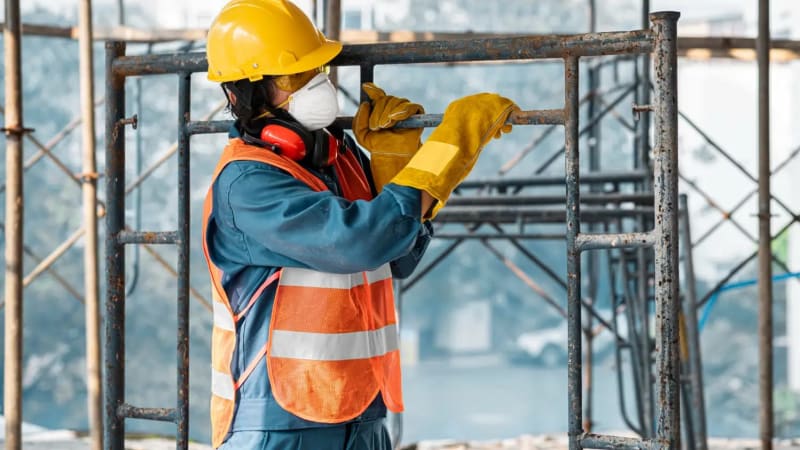

A foreman I know once skipped the morning safety walkthrough because the crew was behind schedule. That afternoon, a worker fell eight feet from an unsecured scaffold and broke his collarbone. The job got shut down for two weeks, and the company faced a $16,000 OSHA fine. All of it could have been avoided with a simple ten-minute check. A solid construction site safety checklist is not paperwork for the sake of paperwork. It is the one tool that stands between your crew and a preventable disaster. This guide gives you the complete, OSHA-compliant checklist you need to protect workers and stay out of trouble in 2026.
Why Every Construction Site Needs a Safety Checklist
Construction is one of the most dangerous industries in America. Having a structured checklist is not optional if you care about your workers and your business.
The Real Cost of Ignoring Construction Safety
According to the Bureau of Labor Statistics, the construction industry recorded 1,032 worker fatalities in 2024 alone. That means roughly one in five private-sector workplace deaths happens on a construction site, even though the industry only employs about 8% of the total workforce.
The financial hit is just as painful. OSHA can issue fines of more than $16,000 for a single serious violation and up to $165,000 for a willful one. Add in workers' compensation costs, project delays, and legal fees, and a single accident can cost a company hundreds of thousands of dollars.
OSHA's Most Cited Violations on Construction Sites
Based on OSHA's fiscal year 2025 data, fall protection topped the list for the fifteenth straight year with 5,914 citations. Hazard communication came in second, followed by ladder safety, lockout/tagout procedures, and respiratory protection. These numbers tell you exactly where most companies are failing their construction safety audit.
The Complete Construction Site Safety Checklist for 2026
Here is a category-by-category breakdown of everything your jobsite safety inspection should cover. Use this as your daily construction safety checklist or adapt it for weekly audits.
Personal Protective Equipment (PPE) Checklist
- Hard hats inspected for cracks and proper fit
- ANSI-approved safety glasses or goggles
- High-visibility vests for all workers
- Steel-toed boots in good condition
- Work gloves appropriate for the task
- Hearing protection in high-noise areas
- Respirators where dust, fumes, or chemicals are present
Fall Protection Checklist
- Guardrails installed on all open edges above 6 feet
- Personal fall arrest systems (harnesses and lanyards) inspected before each use
- Safety nets in place where required
- Floor openings covered and clearly marked
- Ladder access points secured and stable
Scaffolding Safety Checklist
- Scaffolding inspected by a competent person before every shift
- Guardrails, mid-rails, and toe boards in place
- Scaffold built on solid, level footing
- Load limits posted and never exceeded
- Access ladders properly attached
Electrical Safety and Lockout/Tagout Checklist
- All electrical tools and cords inspected for damage
- Ground-fault circuit interrupters (GFCI) on all temporary power
- Lockout tagout procedures followed before any equipment maintenance
- Only qualified electricians working on electrical systems
- Safe clearance maintained from overhead power lines
Heavy Equipment and Machinery Checklist
- Pre-operation inspection completed and documented
- Operators hold valid certification
- Blind spot mirrors and backup alarms functioning
- Seat belts worn at all times
- Exclusion zones marked around operating equipment
Hazard Communication and Chemical Safety Checklist
- Safety Data Sheets (SDS) accessible for all chemicals on site
- All containers properly labeled per OSHA 29 CFR 1910.1200
- Workers trained on hazard communication procedures
- Spill kits available near chemical storage areas
Housekeeping and Site Organization Checklist
- Walkways and exits clear of debris and materials
- Waste and scrap removed regularly
- Materials stored securely and stacked properly
- Adequate lighting in all work areas
- Sanitation facilities clean and accessible
How to Prevent the OSHA Fatal Four Hazards
The OSHA Fatal Four are responsible for nearly 60% of all construction worker deaths each year. Here is how to tackle each one.
Preventing Falls on Construction Sites
Falls account for about 33.5% of all construction fatalities, making them the single deadliest hazard. Every worker at six feet or above must have proper fall protection systems, whether that is guardrails, safety nets, or a personal fall arrest system. Train every crew member on proper harness use and anchor point selection.
Preventing Struck-By Incidents
Struck-by hazards cause roughly 11.4% of construction deaths. Keep workers in high-visibility clothing at all times. Set up barricades around crane operations and overhead work. Never allow anyone to stand under a suspended load.
Preventing Electrocution Hazards
Electrocution makes up about 8.4% of fatalities. Always use GFCI protection on temporary circuits. Follow strict lockout tagout procedures before servicing any electrical equipment. Maintain a minimum ten-foot clearance from overhead power lines for all equipment and materials.
Preventing Caught-In/Between Accidents
These account for around 5.4% of deaths. Never enter an unshored trench deeper than five feet. Use machine guarding on all equipment with moving parts. Keep hands, feet, and loose clothing away from pinch points and rotating machinery.
Daily vs Weekly Construction Safety Inspections
Knowing what to check and how often is the difference between a proactive site and a reactive one.
What to Check Every Day Before Work Starts
A daily construction safety checklist should include a quick pre-shift walkthrough of the entire site. Check all PPE, inspect scaffolding and fall protection gear, verify that equipment operators are certified, and assess weather conditions that could create new hazards. This takes about ten to fifteen minutes and can save lives.
Weekly and Monthly Inspection Schedules
Weekly inspections should go deeper. Audit fire extinguisher locations and expiration dates, review scaffolding safety standards, and check all electrical connections. Monthly reviews should include training record verification, incident trend analysis, and at least one emergency response drill.
Emergency Preparedness Checklist for Construction Sites
This is the section most safety guides skip entirely, but a worksite hazard assessment is incomplete without emergency planning.
Emergency Action Plan Essentials
OSHA requires every construction site to have a written emergency action plan under 29 CFR 1926.35. This plan must include procedures for reporting emergencies, evacuation routes, headcount procedures, and contact information for local emergency services. Post the plan in a visible location and review it with every new worker on their first day.
First Aid and Medical Emergency Readiness
- At least one stocked first aid kit for every 25 workers
- AED device accessible within a two-minute walk
- At least one trained first responder on every active shift
- Emergency phone numbers posted at multiple locations
- Clear directions to the nearest hospital posted on site
Fire Prevention and Evacuation Routes
- Fire extinguishers placed within 100 feet of any work area
- Evacuation routes clearly marked with signs
- Assembly points identified and communicated to all workers
- Hot work permits required for welding, cutting, and grinding
- Flammable materials stored away from ignition sources
Smart Safety Technology for Construction Sites in 2026
Building site safety compliance is getting a major upgrade thanks to new technology.
Wearable Sensors and Smart Helmets
Smart helmets and safety vests now come equipped with sensors that track heart rate, body temperature, movement patterns, and fatigue levels in real time. When a worker shows signs of heat stress or an unusual posture that suggests a fall risk, the system sends an immediate alert to the supervisor.
AI-Powered Safety Monitoring and Drones
AI-equipped drones can scan scaffolding, rooftops, and excavation sites for hazards without putting a single person at risk. According to recent industry reports, companies using smart helmet and wearable sensor technology have seen up to a 35% reduction in workplace accidents and a 20% boost in worker efficiency.
Digital Inspection Apps and Real-Time Reporting
Paper checklists are quickly being replaced by digital construction safety inspection checklist apps. These tools allow supervisors to complete inspections on a tablet, attach photos, flag issues for immediate action, and generate compliance reports automatically. Real-time reporting means hazards get addressed in minutes rather than days.
Seasonal Safety Adjustments for Construction Sites
Your construction site safety rules should change with the weather. What works in April will not protect your crew in August or January.
Hot Weather and Heat Stress Safety
- Enforce mandatory hydration breaks every 20 to 30 minutes
- Provide shaded rest areas on site
- Follow an acclimatization plan for new or returning workers
- Watch for signs of heat exhaustion: dizziness, nausea, heavy sweating
Cold Weather and Winter Hazard Safety
- Provide warm-up shelters and rotate workers between cold and warm tasks
- Remove ice from walkways, ladders, and scaffolds before work begins
- Check all PPE for cold weather suitability (insulated gloves, layered clothing)
- Monitor workers for signs of hypothermia and frostbite
Rain, Wind, and Storm Safety Protocols
- Stop crane operations when wind exceeds manufacturer limits
- Apply anti-slip measures on all walking surfaces
- Halt work and move to shelter during lightning storms
- Secure loose materials and tools that could become projectiles
Frequently Asked Questions
Build a Safer Construction Site Starting Today
A good construction site safety checklist does more than check boxes. It builds a culture where every worker goes home safe at the end of the day. Start with the basics, cover the Fatal Four, plan for emergencies, and adjust for the seasons. The tools are right here. The only step left is putting them to work.
Make Your Construction Site Safer Now
Want to make your jobsite safer? Bookmark this checklist, share it with your crew, and start your next shift with a proper safety walkthrough.
OSHA Safety Checklist