
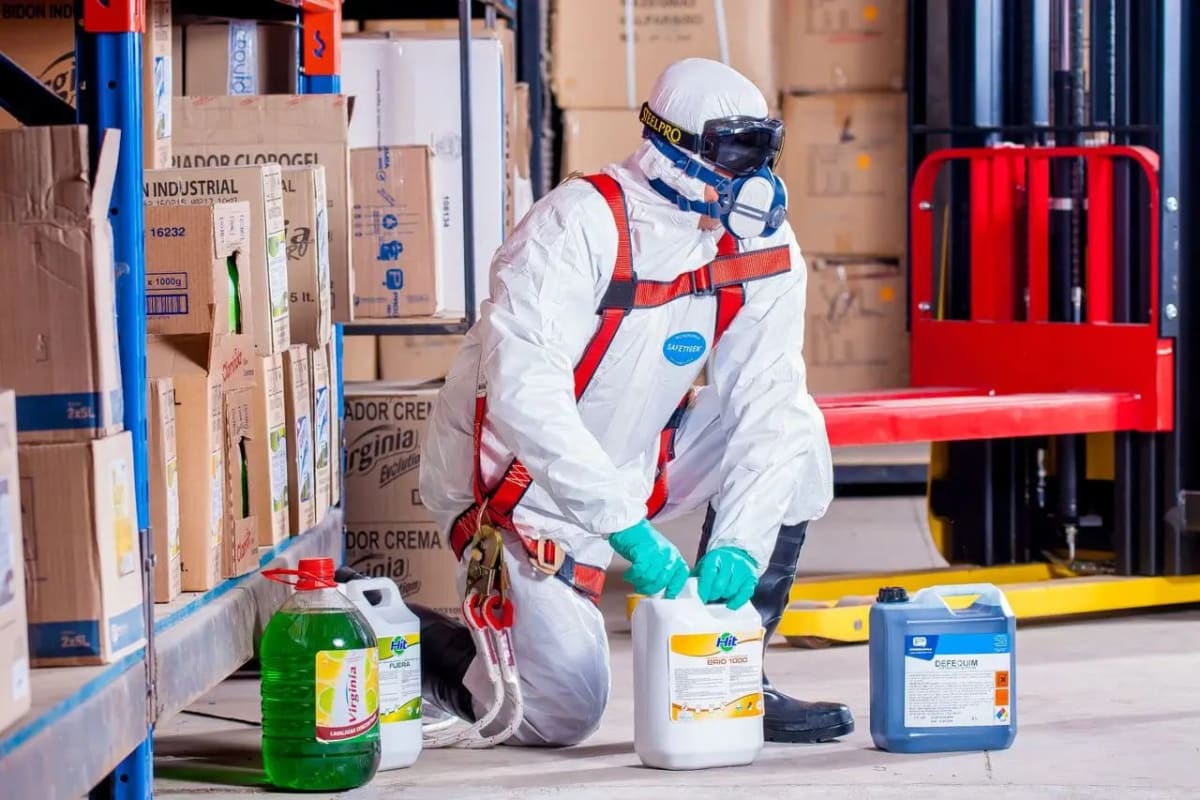
Key Takeaways
- OSHA sets the mandatory rules for safety signs, while ANSI Z535 provides the design playbook that makes them clear.
- Sign colors signal severity: red is Danger, orange is Warning, yellow is Caution, green points to safety, and blue is a Notice.
- Hazard Communication (1910.1200) was the second most cited OSHA standard in fiscal year 2025, so GHS chemical labels matter as much as wall signs.
- Run the one-hour compliance checklist quarterly to catch faded signs, missing labels, and wrong signal words before an inspector does.
- What Are OSHA Safety Signs and Labels?
- Which OSHA Standards Cover Signs and Labels?
- 1910.145 for General Industry
- 1926.200 for Construction
- OSHA Safety Sign Colors and Signal Words
- Danger vs Warning vs Caution vs Notice
- OSHA vs ANSI Z535: Law vs Best Practice
- The 6 Parts of ANSI Z535
- GHS Chemical Labels Under HazCom
- Safety Tags and Accident Prevention Tags
- Sign Design, Size, Placement, and Legibility Rules
- Do Safety Signs Need to Be Bilingual?
- OSHA Safety Sign Compliance Checklist
- Common Signage Mistakes That Lead to Citations
- Frequently Asked Questions
- Final Word on Signage Compliance
A faded yellow sign nobody reads. A chemical drum with no label. A "DANGER" tag slapped on a hazard that only deserves a "CAUTION." These small slips look harmless until an inspector walks in or someone gets hurt. OSHA safety signs and labels exist to stop that exact moment, and getting them right is one of the cheapest ways to protect your people and dodge a costly citation.
This guide breaks down what the law actually requires, what each color and signal word means, how OSHA and ANSI fit together, and how to run a quick compliance check before anyone else does. By the end, you will know exactly what belongs on your walls, your machines, and your chemical containers in 2026.
What Are OSHA Safety Signs and Labels?
Safety signs, labels, and tags are visual warnings that tell workers about a hazard, how serious it is, and what to do about it. A sign is usually fixed to a wall or post. A label is attached to a product or container. A tag is a temporary warning hung on equipment that should not be used.
Here is the part that trips people up. Some of these visuals are legally required, and some are simply smart practice. OSHA sets the mandatory rules. Standards groups like ANSI fill in the design details. Both matter, but only one can hand you a fine.
Think of signage as a silent language. When it follows a consistent system, a forklift driver, a new hire, and a visiting contractor all read the same warning the same way, even from across a noisy floor.

Consistent signage lets every worker read the same warning the same way.
Which OSHA Standards Cover Signs and Labels?
Two main regulations do the heavy lifting, and they are split by industry. If you only remember two numbers, remember these.
1910.145 for General Industry
The rule at 29 CFR 1910.145 covers accident prevention signs and tags for most workplaces, from warehouses to manufacturing plants. It defines the three core sign categories (Danger, Caution, and Safety Instruction), spells out their colors, and requires that wording be easy to read and understand.
It also demands that signs stay legible. A sign caked in grime or peeling at the corners can be treated as no sign at all.
1926.200 for Construction
Construction sites follow 29 CFR 1926.200. The logic mirrors general industry, but it adds site-specific items like traffic signs, accident prevention tags, and barricades for active work zones.
The practical takeaway: a sign that satisfies a factory may not cover a job site, and vice versa. Match the standard to where the work actually happens. For a wider view of where signage fits, our OSHA compliance guide maps out the full picture.
OSHA Safety Sign Colors and Signal Words
This is the section most people search for, so let's make it the clearest part of the page. OSHA safety signs use a fixed color code paired with a signal word. The color grabs attention from a distance, and the word tells you how bad the situation is.
Here is the quick reference chart.
| Color | Signal Word | What It Means | Common Use |
|---|---|---|---|
| Red | DANGER | Will cause death or serious injury if ignored | Live electrical, flammable liquids, fire equipment |
| Orange | WARNING | Could cause death or serious injury | Exposed machinery, moving parts |
| Yellow | CAUTION | Could cause minor or moderate injury | Slip and trip risks, low clearance |
| Green | (Safety Instruction) | Safety, first aid, emergency info | First aid stations, eyewash, exits |
| Blue | NOTICE | Important info, not a physical hazard | Policy reminders, equipment instructions |
A clean way to memorize it: red is the worst, yellow is a heads-up, green points to help, and blue is just information.
Danger vs Warning vs Caution vs Notice
The signal words form a severity ladder, and mixing them up is a real problem. Overuse "DANGER" on a minor risk, and workers start ignoring all your red signs. Underuse it on a deadly hazard, and you have a safety failure on your hands.
- DANGER: Reserved for the highest level. The hazard will hurt someone badly if they ignore it.
- WARNING: A serious hazard, but not as immediate as Danger.
- CAUTION: A lesser hazard that could cause minor or moderate injury.
- NOTICE: No injury risk at all. It covers rules, instructions, or property information.
One detail worth knowing: WARNING (orange) comes from the ANSI system and is widely adopted, while OSHA's older 1910.145 text leans on Danger, Caution, and Safety Instruction. In modern practice, you will see all of them, which is exactly why the next section matters.
OSHA vs ANSI Z535: Law vs Best Practice
People treat OSHA and ANSI like rivals. They are partners. OSHA is the law you must follow. ANSI Z535 is the design playbook that makes your signs clear and consistent.
ANSI standards are technically voluntary, but OSHA references many of them, and following ANSI Z535 is the easiest way to prove your signage meets the spirit of the law. When an OSHA rule is vague on layout, ANSI fills the gap with exact formats, fonts, and symbol rules.
The 6 Parts of ANSI Z535
According to the standards body ANSI, the Z535 family splits into six parts, each covering one piece of the puzzle:
- Z535.1, Safety Colors: the exact color definitions and tolerances.
- Z535.2, Facility Safety Signs: layout and design for signs inside buildings and work areas.
- Z535.3, Safety Symbols: rules for pictograms that cross language barriers.
- Z535.4, Product Safety Labels: label design for equipment and products. The current edition is ANSI Z535.4-2023.
- Z535.5, Safety Tags and Barricade Tapes: temporary warnings for spills, repairs, and lockout/tagout.
- Z535.6, Instructional Materials: safety messaging inside manuals and handbooks.
The big advantage of Z535.3 symbols is that they speak to everyone. A worker who reads little English still understands a skull pictogram or a slip-hazard figure instantly.
GHS Chemical Labels Under HazCom
Most signage articles stop at wall signs and forget the labels that cause the most trouble: chemical container labels. That is a costly blind spot. Hazard Communication, 29 CFR 1910.1200, was the second most cited OSHA standard in fiscal year 2025, drawing roughly 2,546 violations according to OSHA's published Top 10 most cited standards.
Under HazCom, every hazardous chemical container must carry a label aligned with the Globally Harmonized System (GHS). A compliant label needs six elements:
- Product identifier (the chemical name)
- Signal word (Danger or Warning)
- Hazard statement (what harm it can do)
- Pictogram (the red diamond symbols)
- Precautionary statement (how to stay safe)
- Supplier information (name, address, phone)
When a chemical is moved into a smaller workplace container, it still needs at least the product name and key hazards. Blank spray bottles and unlabeled drums are exactly what inspectors look for. Pair your labels with the right gear from our PPE complete guide and you close one of the most common compliance gaps on the floor.
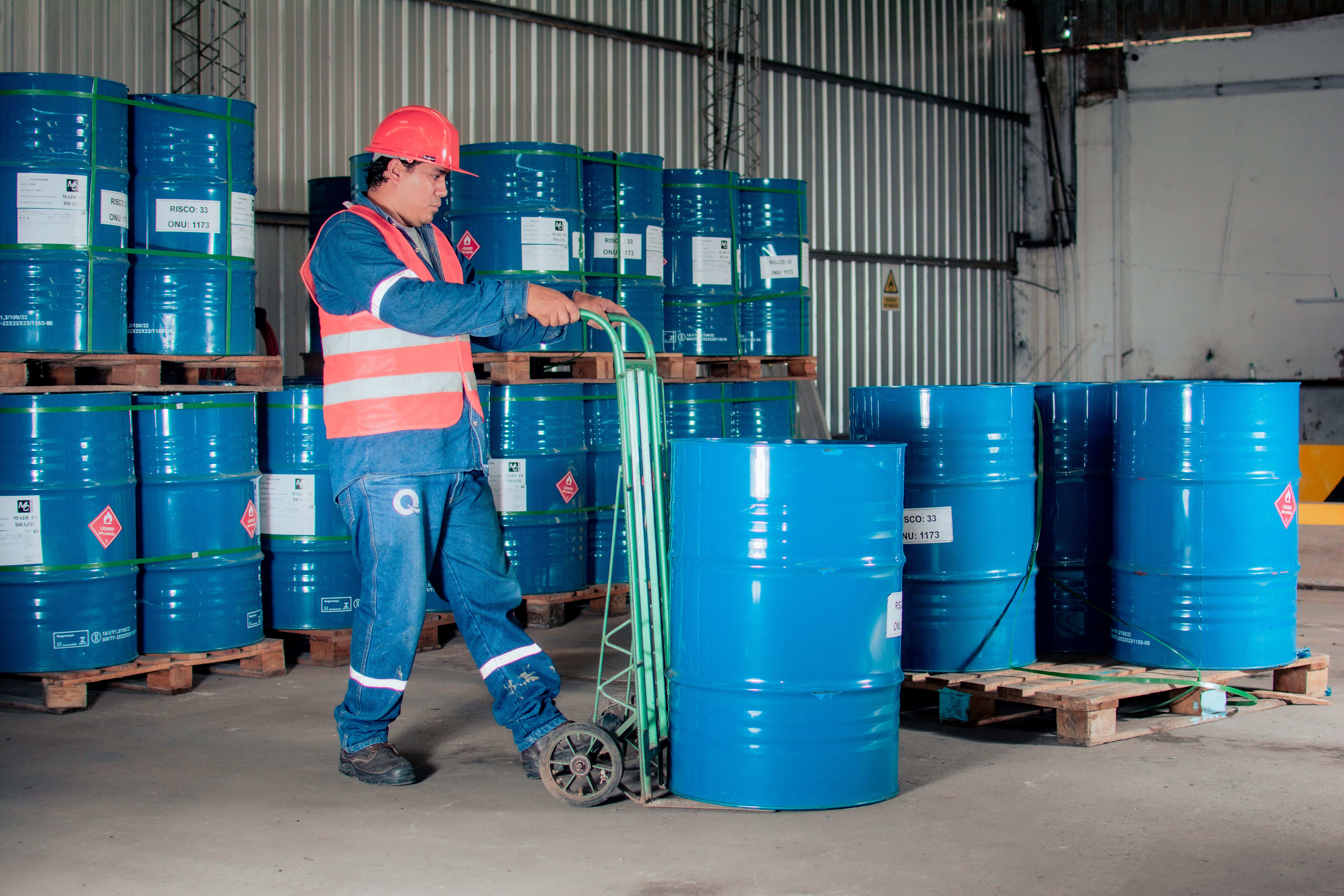
Every hazardous chemical container needs a full GHS label, including secondary bottles.
Safety Tags and Accident Prevention Tags
Tags handle the temporary stuff that a permanent sign cannot. A machine pulled for repair, a scaffold not yet inspected, a section of floor being re-coated. These are short-term hazards, and OSHA expects a warning while they last.
Tags follow the same color and signal-word logic as signs. A "DO NOT OPERATE" tag on a faulty press is a classic example. So is the tag side of lockout/tagout, where ANSI Z535.5 and OSHA's energy control rules overlap directly. If LOTO is part of your operation, our lockout/tagout procedure guide walks through how tags fit the full process.
The rule of thumb: if the hazard is permanent, use a sign. If it is temporary and tied to a task, use a tag, then remove it once the job is done.
Sign Design, Size, Placement, and Legibility Rules
A perfect sign in the wrong spot helps no one. OSHA does not always hand you exact dimensions, which is why ANSI guidance is so useful here. The goal is simple: a worker should read and understand the sign in time to react.
Practical rules that keep you compliant:
- Place signs where the hazard is, at eye level and in the line of approach, not tucked behind a pillar.
- Size for viewing distance. A sign read from 50 feet needs bigger text than one read at arm's length.
- Use durable materials. Outdoor and chemical areas need fade-resistant, weatherproof signs.
- Keep them clean and legible. Replace any sign that is faded, cracked, or covered.
- Avoid clutter. Too many signs in one spot cancel each other out.
Do Safety Signs Need to Be Bilingual?
OSHA does not flatly require bilingual signs, but it does require that workers understand the warnings. If a large part of your crew reads Spanish, English-only signs may not meet that bar.
This is where pictograms earn their keep. A clear symbol paired with two languages reaches almost everyone, regardless of reading level. For diverse US worksites, bilingual text plus ANSI symbols is the safest default.
OSHA Safety Sign Compliance Checklist
Use this checklist to audit any facility in under an hour. Walk the floor, area by area, and check each line. This is the part worth bookmarking.
- Hazard match: Does every real hazard have a sign or tag?
- Correct signal word: Danger, Warning, Caution, or Notice used at the right severity?
- Right colors: Do colors follow the OSHA and ANSI code?
- Chemical labels: Do all containers carry full GHS labels, including secondary bottles?
- Legibility: Any faded, cracked, dirty, or blocked signs to replace?
- Placement: Are signs at eye level, near the hazard, and visible on approach?
- Language: Will every worker understand them? Symbols or bilingual text where needed?
- Tags: Are temporary tags in place for repairs and out-of-service equipment?
- Exits and emergency: Are exit, first aid, and fire equipment signs clear and lit?
- Maintenance log: Is there a schedule to re-check signage regularly?
Run this quarterly, and most signage citations simply never happen. To see how these gaps map to real penalties, compare them against our breakdown of OSHA violation types and penalties.
Common Signage Mistakes That Lead to Citations
Even careful employers slip on the same handful of errors. The stakes are real: for 2026, OSHA's maximum penalty is $16,550 per serious violation, climbing to $165,514 for willful or repeat violations, based on OSHA's published penalty schedule. Each violation counts separately, so a single walkthrough can stack fast.
Watch for these:
- Wrong signal word, like Caution on a deadly hazard.
- Missing chemical labels on secondary containers and spray bottles.
- Faded or blocked signs that no longer count as warnings.
- No tags on equipment taken out of service.
- English-only signs where workers cannot read them.
- Sign overload, where so many signs crowd a space that none stand out.
A quick story makes the point. A mid-size warehouse I reviewed in a published case study had spotless equipment but a row of unlabeled cleaning-chemical bottles by a sink. One inspection turned that overlooked corner into several HazCom citations. The fix cost a few dollars in labels. The fine did not.
If fire safety signage is part of your space, our workplace fire safety guide covers exit and equipment signs in depth, and our common workplace hazards guide helps you spot what needs a sign in the first place.
Frequently Asked Questions
OSHA requires signs that warn of hazards using set colors and signal words, stay legible, and sit where workers can see them. General industry follows 1910.145, construction follows 1926.200, and chemical labels follow HazCom 1910.1200.
Red means Danger, orange means Warning, yellow means Caution, green points to safety and first aid, and blue is a Notice with information only. Color signals severity before a worker even reads the words.
Yes. Under HazCom 1910.1200, hazardous chemical containers must carry GHS labels with a product name, signal word, pictogram, hazard statement, precautionary statement, and supplier details.
OSHA is a mandatory law. ANSI Z535 is a voluntary design standard that OSHA often references. Following ANSI Z535 is the simplest way to make signs clear and meet OSHA's intent.
Not by default, but workers must understand the warnings. If your crew includes many non-English readers, add a second language and ANSI symbols so everyone gets the message.
Final Word on Signage Compliance
Good signage is not about decorating your walls. It is about making sure every worker reads the same warning, the same way, the moment it matters. Get the colors, signal words, chemical labels, and placement right, and you turn a common citation risk into one of your strongest safety habits.
Start with the checklist above, fix the easy gaps today, and build OSHA safety signs and labels into a routine you repeat every quarter. Your people, and your bottom line, will thank you.
Found a gap on your own floor while reading this? Share this guide with your safety team and run the checklist together this week.
Explore More Guides
![How to Run a Facility Safety Audit in 7 Steps [Checklist]](https://res.cloudinary.com/saad5690/image/upload/c_fill,w_800,h_450,g_auto,q_auto,f_auto/posts/bunulfx4xwgcm1qdtnjp)
